Th
In a horror thriller, as The Women In Black is, it is important tension and suspense to draw the audience in before using methods of jump cuts, and dark narrative to provide a narrative hook for the audience. The general conventions of horror thrillers are that gore, jump cuts and ghosts, or murders and this sort of relevant to the story of the The Woman In Black. In order to create tension, horror films use many methods, like J cuts, or through the use of sound and editing to make an eerie underscore which builds up to a sudden piece of music that scares the audience. With editing, it can be used to make the scene a quicker pace through match on action, or short cuts to make the scene more frantic, but what about camera work? Is that used to create tension in a horror thriller? Using this montage here, I will analyse how camerawork is used to create tension.
The first piece of camerawork is a piece of movement that surveys the scene. The pan is used because not only does it survey the scene and set the scene, but it also provide connotations that there is something that is lurking in the space off camera, for the audience, it adds tension as the audience are waiting to be shocked and surprised by a moment of scare or horror, and instead, the action cuts to a mid shot of Daniel Radcliffe's character Arthur Kipps enters the room with a candle, and so this moment built up from the slow paced pan complimented with the underscore of a jack in the box creates an eerie atmosphere but this shot shows an anti climatic moment, which engages the audience as they are waiting for a moment of horror or to be made to jump by the action of screen and that is not present at this moment. The next piece of camera work is a close up on a doll, which is agreeing with the connotations of the horror thriller sub genre as a whole, so this shot is summing up the genre and also making this instantly recognisable to the audience that The Women In Black is enticing to consume the film, so it connotes the natural conventions of horror as a subgenre. The doll also foreshadows the youth that are going to be killed by The Woman In Black, as dolls are a toy but in this shot, it stands independently and is lonely, so that's a metaphorical shot foreshadowing the conclusion of the film. An overhead shot follows and shows Arthur Kipps entering the room with a candle, as an audience, we get a wider perspective of the film, and also to show at this point, there is nothing behind Arthur Kipps, so there is nothing to be to be afraid of, although for the audience, this shot lures them into a false sense of security and many may be more tense due to a moment of scaring being imminent. The next moment is a close up of the mirror, with an out of focus black figure to the right of the mirror, this is evidently a moment of high suspense, as the figure wasn't present when we saw an overhead shot with a birds eye view of the room, also, the shot is short and complimented with a sharp, sudden piece of music to build the tension further as the pace of the shot doesn't allow the audience to see this figure in any detail. The music that matches this shot is of a higher volume and this scares the audience, the movement of the figure only builds the tension further as the audience see the figurine move away from the mirror which connotes the moment that Arthur Kipps feeling of security and safety leaves him as this figure dances away in a fashion that is fearful to the audience. The shots then cut back to the overhead shot seen previously, but this time, the black figure is present with in it, this shows her as a spirt with in the film as she jumps and hangs herself. The darkness and height of the shot shows the distance between the two characters due to the difference of humanity and spirit and how the relationship is distanced and the close up of the hanging shortly after blames humanity for the spirits being left behind on a planet in which they don't belong. Next we see a series of fast paced shots show the frantic mental state that Kipps experiences due to this altercation and also maintains the tension being experienced by the audience as The Women In Black is seen multiple times within a short period which is scary and shocking for the audience which is the objective of the character, also, it is a character seen by bothe the audience and Kipps, so there is a realtion of shared feelings such as anxiousness and feeling fearful regarding the situation. The closing scene goes back to the doll but this time in a change of position to provide the message that things aren't always as they seem, but the close provides intimacy and closeness that is awkward and uncomfortable but also shows the movement in an inanimate object which provides tension as it is clearly being orchestrated by The Woman In Black, which in itself provides tension as it shows power and magical essence. The transition of longer, wider shots into more intimate shots provides the impression that something is brewing and the close ups provide an intimacy with the protagonist.
In the second clip, we start with a mid shot of a bloody Arthur Kipps surveying the scene looking for something/someone, the cuts on his face show the physical suffering he has gone through in this fire, but also the mental torture that The Woman Of Black is putting him through during the film. This cuts to a POV shot, which puts us in the shoes of Arthur Kipps, as the audience, the pan of the camera allows us as an audience to see the scene from the characters perspective, and the tension is unbearable as we already know that there is a girl present in the building, so when we finally get a glimpse of her as the camera pans, that's a tense moment for us an an audience as the fire is blocking Kipps and the young girl, which is a distance being placed by the ghostly figure of The Woman In Black, so for the audience, the tension being built is as we discover the girl and the camera movement allows the location of the girl at the same time as the main character. The series of shot-reverse shot that follows builds tension as the possessed girl looks set to inigite the fire further, much to the agony of Kipps, and this series of shots is a close up to Kipps, to provide intimacy and show emotions are more detailed and interaction with the audience is in a closer proximity than the girl, who is further away in camerawork and this connotes how possessed she is but also how decisive she is in her decision making, this is tense for the audience, as the young girl is vulnerable and The Woman In Black is taking a young girls life and already the deed is already done, the guilt the audience feels is strong due a child being possessed and killed by a spiritual thing.
The third scene starts once more with a close up of Kipps, approaching a corridor of darkness, as is made evident to us as an audience by the POV shot that follows this, and for the audience, this is tense as we think The Woman In Black is lurking around the audience waiting to make us jump and scare the audience, so the tension builds higher and higher the more the camera moves around the corner, the darkness is foreshadowing the conclusion of the film, as no matter how much you face her or fight her, ultimately she will take your life, and that's being shown with the inclusion and emphasis on the dark space with in this shot. As we see the corridor in its entirety, this only cranks up the tension more, as The Woman In Black is nowhere to be seen, so where is she? For the audience this is a very tense moment created by a POV shot complimented with a pan movement. The same shot is kept as a darkness accelerates down the hall, but this time the shot is kept still and motionless, this is symbolic to how Kipps can't stop The Woman In Black getting what she wants, which is the death of children. The close up that follows provides further exclusivity of emotions and adds detail and texture to the sequence, as the lights turn off, only one thing is evitable. The next shot we see is a mid shot, but it complies with the rule of thirds, as Kipps is to left of the picture, and The Woman In Black to the right. With Kipps, although the shadow makes him look scary and intimidating, the fact his human features are visible means the audience don't fear him, as he is mearly mortal, however, The Woman In Black is in the corner and blends in with the darkness with hidden features, with is more intimidating and provides the connotations that her features aren't mortal or human like, it distances her from the audience which adds tension as we are already capable of her she operates and this, with her 1 on 1 in a room with Kipps, seems a sense of definity about it, particularly when she screams and floats towards Kipps, her features become visible and provide tension as she looks to hurt Kipps and enviably bring him to her form. Finally, the close up of Kipps eyes shows the mental torture and strain she is placing on him as a character as he ducks from the spirit, we then cut to a mid shot with the doll iun focus and the background being out of focus, the motif of the doll shows how The Woman In Black wants to capture youth and have it to herself.
To summarise, The Woman In Black uses a variety of shots and movement but ultimately, the shots comply with the conventions mentioned in the opening paragraph of this blog, and that makes it really obvious that horror thriller is the genre of this film and that makes it evident to the audience. In terms of how it creates tension, I think the use of fast editing, underscore and camera work all interlink to create tension and are like clockwork in the sense they all come together to create something greater. I will look to use some of the shots such as POV or close up to capture tension and create it, as we are aiming to create a Psychological Thriller, which is something wherethe creation of tension is vital.
Showing posts with label G321 Thriller Research. Show all posts
Showing posts with label G321 Thriller Research. Show all posts
Friday, 17 February 2017

Tuesday, 10 January 2017
Fonts in Thriller films

Firstly, the typography is presented in a serif typeface, this is clear as the letters have a slight projection off the stroke of letters, like, for example, Times New Roman. This provides enormous clarity and the use of lowercase letters provides a neat square in which the text has been presented to add simplicity and a nice aesthetic to the typography. This font also has a fixed pitch and as the screenshot shows, it contains a mix of both uppercase and lowercase letters, however, in the words 'Need' and 'Speed', contain uppercase letters which are the same in terms in sizing. The font fades in via a good flutter of specs similar to that of a wielding machine during use, this is a symbolic way to show the mechanics behind how a car is made and give the film a feel and channel the theme of the film in the typography.
The font is a grey colour presented to the audience on a black background which has a gold shining on certain letters. Grey is a neutral colour which often presents connotations and feelings of depression and loss, according to key psychological studies. However, it is also regarded as a sophistication and formality. So the production team is trying to balance this neutrality and sophistication with the shining of gold which connotes wealth and beauty of the cars used in this action thriller. So the typography of this allows a neutral atmosphere that doesn't give to many hints and surprises regarding the rest of the film. Also, the grey matches the wheels of the cars, so at this stage, it's about reflecting the main theme and focus point of the film, and that's cars, which is also reflected with in this typography.
The placement of the text is interesting in respect that its placed in the centre of the screen on a black background, it is almost an example of reserve type, but the letting of the typeface is placed in a way that makes it stand out and easy to read for the audience. There is a slight rotation as the font is presented and this reflects when grey smoke comes out of the exhaust and this is reflected with in this movement of the font.
In summary, I think this is a cleverly constructed and thought out piece of Typeface, and with all the connotations and atmosphere it creates presents a nice piece of contrast to the film which is a fast paced action thriller involving cars, guns and fights. The typography is simple but effective but also provides connotations which are clever and relevant. It's a wonderful piece of typography.
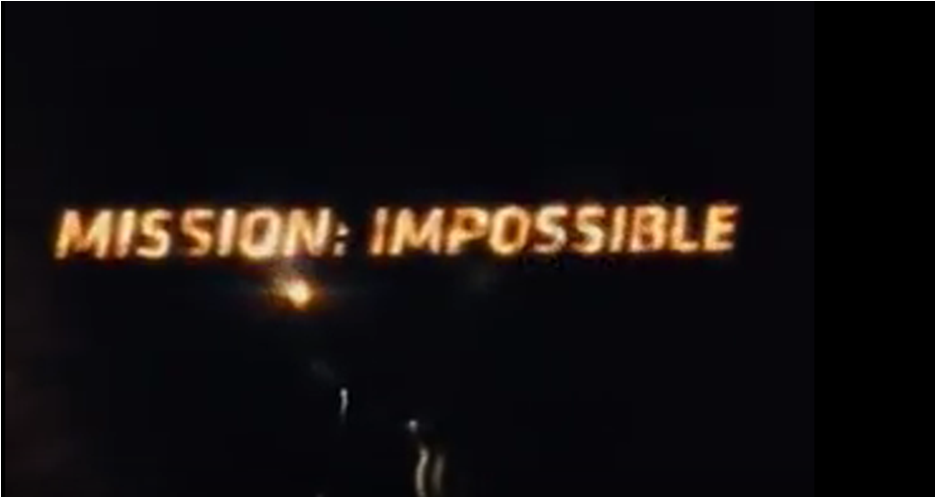
In the opening sequence to Mission Impossible 4, the audience are shown to two sparks following a piece of rope, which is what is responsible for the orange tinge to this piece of typeface. The typeface itself is in block capitals which are all the same point size. In terms of what type this typeface is, its a Sans Serif font, which is different to the example seen previous as it has no serifs and is easier to read as it has no finishing projection.
Already from the opening title sequence the director, Brad Bird, is already connoting danger through the introduction of two fuse wires complimented with the iconic soundtrack of the Mission Impossible series, so there is a sense of danger from the start as well as a familiar piece of sound to play alongside the fizzing of the fuse wires. These two fuse wires cross each other to reveal the typeface and the orange provides connotations of fire and danger, could this foreshadow an explosive entrance for main character Ethan Hunt? Orange also connotes a fiery atmosphere or a lustful feeling so could Hunt be in lust of something? A psychological study into the colour orange says that orange is relating to danger and adventure, so in that respect, the colour of the typeface matches the intentions and sub genre of the film.
The connotations of the typeface is one that mirrors the sub genre of the film, the fuse wires match the danger and action that is going to be experienced by Ethan Hunt, and the colouring is used to match this. The typography is only presented on screen for a short period of time, as the fast paced title sequence is used to match the fast pace at which the film is going to be set. The involvement of a fuse wire suggests to the audience that there is dynamite somewhere waiting to be blown up, so it's important for introduction but maybe a starter to the narrative of the film.
In summary, this font helps set up the film and lets everybody aware that this is an action film that, although part of a series, stands away as an individual film, and the fast pace matches the sub genre it is being placed in.
Tuesday, 3 January 2017
How is sound used in thriller movies to create tension?
In thriller movies, sound is an important aspect of emotions being created to portray to the audience, arguably, at times, has a higher influence on the portrayal of emotions than that of the narrative. In certain films, tension is created through the use of sound and sound is an important aspect of the film production process. For example, in Skyfall, the chase scene exchanged between James Bond and Raoul Silva is fantastic in terms of creating tension through the use of sound.

The volume, pace and tone of the soundtrack are very calm and quiet when Bond isn’t chasing Silva, or when he is looking around for him. But, when Bond is (for example) chasing him the volume/pace dramatically increase and the tone becomes a lot more dramatic and threatening. For example, when Bond is unsure of whether to get onto the train or not, the soundtrack’s pace is slower and more quiet. Where as, when Bond is ordered to get onto the train the volume and pace dramatically increase, to create suspense, and to make the audience ask themselves.. “will he make it or not?”.
 During the sequence the audience become aware of when things are becoming intense.
By this we mean that as the pace and volume
of the soundtrack increases, the action becomes more intense and as the volume
goes from low to high the audience become aware something major is about to happen. The sound conforms with action-thriller conventions. In all action –thrillers there are always intense chases/pursuits between protagonist and antagonist. And the sound in this sequence conforms with this as like the action, the sound is fast-paced and intense. The sound from this sequence can be described as synchronous sound because it matches what is going on in the scene. Both the action on screen, and the sound are both very intense and suspenseful, combining to make a very intense sequence. The only sort of sound effect is the emphasis of the volume of the train. The sound of the train is emphasised to let the audience know that Bond is in trouble and as it gets louder, obviously, the train is getting closer. Although the audience know Bond will not die, there is still a feeling that he could.
 In this final sequence of The Amazing Spider-Man directed by Marc Webb, an underscore is used to create tension. The underscore is played over a wide shot of Spider-Man standing precariously on top of a building overlooking Electro's circuit, an underscore is used as it compliments the camera movement and slight zoom on the shot which presents the connotation that something big is about to take place, and the desaturation of the shot conveys the thoughts that something significant is about to unfold and this is very much the calm before the store. The underscore is used to create tension and suspense for the audience to absorb and engross. The underscore helps the film to a climax, and is often used in the scene that is most significant and this is why an underscore is used. The underscore is a bleak and slow tune, which is quite dull and scary, it commends the colours of the scene beautifully to create this gloomy feel to the film. In conventions of thriller films, dark and eerie sounds are used to create atmosphere and feeling, this use of underscore is no different.
 The next piece of sound we hear as an audience is a piece of echoed dialogue from Electro, this is before we see him, this creates the illusion that there is life outside of the scene that is being shown us an audience. The dialogue being echoed creates negative connotations to Electro and by this point of the film, we know, as an audience, Electro is the m
ain antagonist of the film and this is evident by that echoed speech. Dialogue between the two characters helps aid the plotline of the film and develops the audiences understanding of this further. Also, dialogue helps the audience and characterisation of the characters and helps establish clear relationships between characters. There relationship is evidently of one between good and bad, and this is made clear by lines by Electro, however, Spider-Man isn't as worried as the dialogue spoken and his response is fairly sarcastic and composed. Unlike many films, ADR is used in Spider-Man as characters such as Electro are created using CGI and thus require further recording. Although Spider-Man is played by an actor, due to his suit, in places ADR is used, the production company can get away with recording dialogue using this method as it adds clarity to the voice.
 When Spider-Man and Electro come to blows, sound effects are used to replicate the sounds being shown in the fight scene, the fizz of the electrics being used by Electro clearly are sounds being created synthetically as it improves the authenticity of the film by making it more immerse through the use of sound effects. As both Spider-Man and Electro through each other to the floor, there is a few seconds of silence as it seems Spider-Man is left seriously hurt, this moment of silence is symbolising the shock and tension felt by the audience as Spidey appears to have been conquered, which would be a shock considering in the franchise of Spider-Man he is usually victorious.
 The non diegetic sound of the car smashing into Electro has been exaggerated to really place emphasis on the cars entrance to the scene. It's significant as without it, Spider-Man would be killed by Electro, and so by increasing the non diegetic sound, it makes is clear to the audience that this car has high significance to the plotline and this is emphasised through the use of sound. Another technique used here is that of synchronous sound, as the pictures matches with the sound being heard, this is again to enhance realism. Synchronous sound also is vital for the direction of the film, if done poorly, the scene could be ruined, so it's vital to get this right, especially when its being amplified to increase significance.
 When the conclusion of the fight scene is about to occur, an optimistic, more upbeat score is played as it foreshadows the conclusion of the scene, and the upbeat core also provides connotations of goodness and conquering evil towards Spider-Man, which shows the goodness of our superhero protagonist, and this music reflects that. To conclude the scene, this use of score gives the audience some hope and that's needed at points when all hope seems lost for Spider-Man. In terms of creating tension, this film does that terrifically well, with the right balance between shot type, camera movement and sound, its vital to what is being created with characters, plot and symbols. It's imperative to this scene and what makes it tick.
Men In Black scene
 An underscore is played as Will Smith's character, Jay, is seen being approached by what looks to us, the audience, as tentacles towards his face, this is shown alongside the sound effects of buzzing. These sound effects present the idea of something flying, and possibly an alien who is looking to be the catalyst of Jay's demise and death. The underscore is upbeat and positive tone, despite the fight scene occurring, which is quit
e contrapuntal in terms of what is being heard, however, this is successful in building tension, as its quite uneasy as Jay is being attacked by multiple aliens and we've already seen Kay, his co agent, being tortured by a dangerous women.
 After being thrown into a wall by the extra terrestrial beings, the sound of scratching is heard as Jay slides down the wall, this is a non diegetic sound that has been amplified by the sound editors to exaggerate the noise that was created to increase the impact of this moment, to make it more dramatic and increase the tension being created by immersing the audience and to make them emotionally connect with Jay which they would do as Jay is the protagonist and thus the audience are willing him to do well and achieve. I
t's after Jay curls off the wall that the underscore changes as it becomes more tense in terms of tone and more aggressive in pitch, this replicates the emotions that are being felt by Jay at the time he begins to approach the aliens, the fun hearted and jokey Jay has been switched and he is now more aggressive and focused Jay, he is still confident, but his approach to the situation has altered and that's evident to the audience.
 The sound effect of Jay hitting one copy of the alien has been put in after filming as the CGI aliens wouldn't have been hit, meaning there is no simply no diegetic sound produced. the impact would be minimal, so to humanise the aliens, they require sound effects to ensure they are believable to the audience. This is something that continued throughout the fight scene as Jay takes on numerous copies of the aliens, and the sound effects used improve narrative, characterisation and the authenticity of the film as a whole.
 After Jay has fought off the aliens, he falls into a pile of tubing on the floor, here, the diegetic sound of the tubes are amplified for comedic effect. The effect this has on the audience is that it portrays Jay to be a humorous character which instantly makes him more likeable as he is an underdog in the fight scene scenario and the fact he can't release himself from tubing to save the girl who is trapped up is comical and amplifying this sound adds comedy to a scene where tension has been built up, but despite the comedic element to the scene, there is a voiceover of a countdown being heard throughout this shot as Jay try's to free himself from the tubing, so despite this being a comedy moment, tension is being built by the countdown surrounding him.

This clip is another great example of how thrillers use sound to create tension. Tom Cruise's character Ethan Hunt is the subject of a motorcycle chase, to increase tension, different techniques are used in terms of sound to do this. To start the clip, we see a tracking shot complimented with the noises conventionally associated with a motorcycle, this has been increased in volume and pace, to present the fact that the motorcycle is the main focus of shot, and not that of the vehicles it is sharing the stretch of road with. By editing the sound so that the motorcycle noise is non diegetic really puts emphasis on the motorcycle and that directs the audience, the use of tracking shot puts the audience into the scene, so this combination works effectively for this shot.
 As the scene progresses, we hear the sound effects of the gun shots, which are introduced alongside the non diegetic sound of the motorcycles, this is because the fact the production team cannot actually use bullets in fear of killing someone, so adding sound effects in editing enhances the scene and ensure safety whilst maintaining quality with in their film. Although you cannot see the bullets, the sound effects add comfort to the audience and creates the illusion that bullets are being used and this is in fact a real chase in which lives are at stake. The diegetic sound of glass smashing as a bullet shatters it also helps with this illusion, it's cleverly constructed by the production team to ensure this is a chase of the highest quality, and the introduction of bullets and weaponry means lives are at stake and this increases tension massively, also, the use of motorcycles allow more danger to be added to the situation, so tension is built and is helped being built by the use of sound.
 As the scene develops, a score is introduced to support the high speed chase. Using an underscore here would be contrasting and not fit with the pictures, so by having a fast paced, intense piece of score being played alongside the pictures, it supports the scene and adds pace to what is an already intense, high risk scene, so this would add tension as it takes the stakes up higher, both men are riding for their lives and the audience are backing their hero, Ethan Hunt, in this chase, so by adding a score that is of quick pace, you add to the danger of the piece, which climaxes when the motorcycles are weaving in and out of cars as the danger is increased and raised beyond belief. It symbolises danger, and as the danger increases, that is matched by the score being played alongside the shot.
 We then cross cut to a shot of a girl standing on the edge of a cliff, and the underscore is dramatically changed to that of a slower paced, tense piece of music to accommodate the wide shots of this scene, this is a real change of direction in terms of narrative, as we have cut away from a tense chase to a calming, almost sad setting, it poses a variety of questions to the audience. Who is this girl? Why is she on a cliff? Is she going to kill herself? These are all raised because of that underscore, if an upbeat piece of music was being played, the audience's questions wouldn't be so negative and suspicious, and from the high paced chase to this is an interesting change of direction. This snippet seems to be waiting for something to happen, and cuts back to the loud, monstrous motorcycle, maybe this is what Hunt is defending?
In conclusion, films use numerous methods and techniques to riddle films with connotations of tension and to enhance that emotional connection shared between audience and characters, and the proxemics between these two elements of films, without tweaks and important planning, sound can make or break a film and these are successful elements of when sound is used successfully.

The volume, pace and tone of the soundtrack are very calm and quiet when Bond isn’t chasing Silva, or when he is looking around for him. But, when Bond is (for example) chasing him the volume/pace dramatically increase and the tone becomes a lot more dramatic and threatening. For example, when Bond is unsure of whether to get onto the train or not, the soundtrack’s pace is slower and more quiet. Where as, when Bond is ordered to get onto the train the volume and pace dramatically increase, to create suspense, and to make the audience ask themselves.. “will he make it or not?”.

By this we mean that as the pace and volume
of the soundtrack increases, the action becomes more intense and as the volume
goes from low to high the audience become aware something major is about to happen. The sound conforms with action-thriller conventions. In all action –thrillers there are always intense chases/pursuits between protagonist and antagonist. And the sound in this sequence conforms with this as like the action, the sound is fast-paced and intense. The sound from this sequence can be described as synchronous sound because it matches what is going on in the scene. Both the action on screen, and the sound are both very intense and suspenseful, combining to make a very intense sequence. The only sort of sound effect is the emphasis of the volume of the train. The sound of the train is emphasised to let the audience know that Bond is in trouble and as it gets louder, obviously, the train is getting closer. Although the audience know Bond will not die, there is still a feeling that he could.
 In this final sequence of The Amazing Spider-Man directed by Marc Webb, an underscore is used to create tension. The underscore is played over a wide shot of Spider-Man standing precariously on top of a building overlooking Electro's circuit, an underscore is used as it compliments the camera movement and slight zoom on the shot which presents the connotation that something big is about to take place, and the desaturation of the shot conveys the thoughts that something significant is about to unfold and this is very much the calm before the store. The underscore is used to create tension and suspense for the audience to absorb and engross. The underscore helps the film to a climax, and is often used in the scene that is most significant and this is why an underscore is used. The underscore is a bleak and slow tune, which is quite dull and scary, it commends the colours of the scene beautifully to create this gloomy feel to the film. In conventions of thriller films, dark and eerie sounds are used to create atmosphere and feeling, this use of underscore is no different.
  The next piece of sound we hear as an audience is a piece of echoed dialogue from Electro, this is before we see him, this creates the illusion that there is life outside of the scene that is being shown us an audience. The dialogue being echoed creates negative connotations to Electro and by this point of the film, we know, as an audience, Electro is the m
ain antagonist of the film and this is evident by that echoed speech. Dialogue between the two characters helps aid the plotline of the film and develops the audiences understanding of this further. Also, dialogue helps the audience and characterisation of the characters and helps establish clear relationships between characters. There relationship is evidently of one between good and bad, and this is made clear by lines by Electro, however, Spider-Man isn't as worried as the dialogue spoken and his response is fairly sarcastic and composed. Unlike many films, ADR is used in Spider-Man as characters such as Electro are created using CGI and thus require further recording. Although Spider-Man is played by an actor, due to his suit, in places ADR is used, the production company can get away with recording dialogue using this method as it adds clarity to the voice.
 When Spider-Man and Electro come to blows, sound effects are used to replicate the sounds being shown in the fight scene, the fizz of the electrics being used by Electro clearly are sounds being created synthetically as it improves the authenticity of the film by making it more immerse through the use of sound effects. As both Spider-Man and Electro through each other to the floor, there is a few seconds of silence as it seems Spider-Man is left seriously hurt, this moment of silence is symbolising the shock and tension felt by the audience as Spidey appears to have been conquered, which would be a shock considering in the franchise of Spider-Man he is usually victorious.
  The non diegetic sound of the car smashing into Electro has been exaggerated to really place emphasis on the cars entrance to the scene. It's significant as without it, Spider-Man would be killed by Electro, and so by increasing the non diegetic sound, it makes is clear to the audience that this car has high significance to the plotline and this is emphasised through the use of sound. Another technique used here is that of synchronous sound, as the pictures matches with the sound being heard, this is again to enhance realism. Synchronous sound also is vital for the direction of the film, if done poorly, the scene could be ruined, so it's vital to get this right, especially when its being amplified to increase significance.
Men In Black scene
 An underscore is played as Will Smith's character, Jay, is seen being approached by what looks to us, the audience, as tentacles towards his face, this is shown alongside the sound effects of buzzing. These sound effects present the idea of something flying, and possibly an alien who is looking to be the catalyst of Jay's demise and death. The underscore is upbeat and positive tone, despite the fight scene occurring, which is quit
e contrapuntal in terms of what is being heard, however, this is successful in building tension, as its quite uneasy as Jay is being attacked by multiple aliens and we've already seen Kay, his co agent, being tortured by a dangerous women.
 After being thrown into a wall by the extra terrestrial beings, the sound of scratching is heard as Jay slides down the wall, this is a non diegetic sound that has been amplified by the sound editors to exaggerate the noise that was created to increase the impact of this moment, to make it more dramatic and increase the tension being created by immersing the audience and to make them emotionally connect with Jay which they would do as Jay is the protagonist and thus the audience are willing him to do well and achieve. I
t's after Jay curls off the wall that the underscore changes as it becomes more tense in terms of tone and more aggressive in pitch, this replicates the emotions that are being felt by Jay at the time he begins to approach the aliens, the fun hearted and jokey Jay has been switched and he is now more aggressive and focused Jay, he is still confident, but his approach to the situation has altered and that's evident to the audience.
 The sound effect of Jay hitting one copy of the alien has been put in after filming as the CGI aliens wouldn't have been hit, meaning there is no simply no diegetic sound produced. the impact would be minimal, so to humanise the aliens, they require sound effects to ensure they are believable to the audience. This is something that continued throughout the fight scene as Jay takes on numerous copies of the aliens, and the sound effects used improve narrative, characterisation and the authenticity of the film as a whole.
  After Jay has fought off the aliens, he falls into a pile of tubing on the floor, here, the diegetic sound of the tubes are amplified for comedic effect. The effect this has on the audience is that it portrays Jay to be a humorous character which instantly makes him more likeable as he is an underdog in the fight scene scenario and the fact he can't release himself from tubing to save the girl who is trapped up is comical and amplifying this sound adds comedy to a scene where tension has been built up, but despite the comedic element to the scene, there is a voiceover of a countdown being heard throughout this shot as Jay try's to free himself from the tubing, so despite this being a comedy moment, tension is being built by the countdown surrounding him.

This clip is another great example of how thrillers use sound to create tension. Tom Cruise's character Ethan Hunt is the subject of a motorcycle chase, to increase tension, different techniques are used in terms of sound to do this. To start the clip, we see a tracking shot complimented with the noises conventionally associated with a motorcycle, this has been increased in volume and pace, to present the fact that the motorcycle is the main focus of shot, and not that of the vehicles it is sharing the stretch of road with. By editing the sound so that the motorcycle noise is non diegetic really puts emphasis on the motorcycle and that directs the audience, the use of tracking shot puts the audience into the scene, so this combination works effectively for this shot.


In conclusion, films use numerous methods and techniques to riddle films with connotations of tension and to enhance that emotional connection shared between audience and characters, and the proxemics between these two elements of films, without tweaks and important planning, sound can make or break a film and these are successful elements of when sound is used successfully.
Tuesday, 6 December 2016
Motifs in Film
A motif is a repeated item that appears throughout a particular film. The repetition of a motif helps the plot to advance and sometimes helps reveal the theme in that particular film. A motif is often something that is woven into a plot and in order to locate motifs, you have to be an active watcher of film, you must look for reoccurring patterns or items, colours, actions or dialogue we've seen before. Harry Potter is a franchise of films made from the series of books written by JK Rowling, and in the third film of the franchise; Harry Potter and The Prisoner of Azkaban, a motif is repeated throughout the film in many visual representations.
 In this film, a motif is repeated throughout the film that is linked to a dog or a relationship connected to a dog. In the beginning of the film, Dudley's aunt visits Harry in his home. She gets frustrated as the stupidity of certain individuals and delivers the line 'You know what, it's the parents fault, it's just like raising dogs, if there is something wrong with the female dog, then their is going to be something wrong with the child'. This seems like a crazy and irrelevant metaphor at the beginning of the film, but it's actually a highly interesting one to use as Dogs are highly intelligent animals who can be trained to fulfil a number of roles and tasks, so not only is it an irrelevant metaphor, but factually, it's incorrect, so there is a subtle introduction of this motif at the beginning of the film, and one that is carried on only two scenes into the future.
A couple of scenes later, Harry Potter leaves the house in anger at the mistreatment he has been the
 victim of. Potter is visually vexed at the treatment he has suffered, but when he leaves his home, the motif of the dog returns, as he is stalked and chased by a dark, black dog. This suddenly makes Dudley's Aunt's metaphor more relevant, as evidently the dog has a key impact on this film. The slight high angle on the dog puts the audience in Potter's shoes, and shows the danger and fierceness of the encounter with this dog, it engages the audience and provides connotations of danger and a sense of calmness before the storm that occurs later on. Amazingly, the term black dog has been used to symbolise depression in many pieces of literature. Reg Mombassa (An Australian musician) describes Winston Churchill of having a 'black dog' which followed him around, and the combination of 'darkness' and 'dog' seems an apt way of describing depression, its an illness that could potentially be an everlasting companion as dogs are historically referred to as companions of mankind. Furthermore, it could connote the idea of death, as a black dog is a character renounced in myths and legends, it connotes fear and danger but also this idea of death. Black dogs in dreams are always interpreted negatively and throughout the world dreams that involve black dogs are seen to seen to crush the sleepers chest. Could Harry be depressed or in danger?
  This motif of the dog is continued subsequent to Harry's return to Hogwarts as he investigates the contents of his tea leaves after a lesson. An ominous shape of what appears to resemble a hound similar to the one seen chasing Harry previously in the film. The reading of tea leaves is a historical way of finding out fate and where your life is heading. It was used by mystics in the past to predict the future and often you were required to pay for tea leaves to be read. The fact Harry has a symbol of a black dog is no coincidence as it is relevant to the narrative and his fate. According to http://www.tealeaf.ca, the symbol of a dog can mean many things, including the 'thwarting of life chances'. This is evidently a bad reading for Harry as obviously his life is at a liability due to this mysterious, reoccurring dog. This is foreshadowing the conclusion of the film by making it highly obvious this black dog has significance to the narrative and this motif is obviously not being included by accident as it keeps being repeated consistently with high significance. The shot type used is a close up with a slight higher angle to present the dog clearly and thoroughly, but the dark colours of the dog presents this danger and mystery around this particular Dog, why is it being shown? What significance does it have?
  As Harry participates in a game of Quidditch, the Snitch rockets into the air, as Harry chases it as it ascends into the thunderous and gloomy sky, Potter quickly becomes surrounded by Dementors, and when he looks into the clouds, one of the clouds seem to resemble that of the black dog. This symbolises the darkness and incoming meeting of Potter and the Dog, and it's going to be one that isn't enjoyable or friendly as this dog is being repeatedly shown to Potter during this sequence of his life. This means the dog is somehow linked to evil, and this why it is black, as the colour black connotes to the danger and mysterious nature and feeling behind the dog. The Black Dog is also a famous ghost associated with the British Isles. So perhaps Potter is being haunted by this famous spirit who is trying to be his downfall. As fans of the franchise are well aware, the Dementors are characters who torture and torment Potter throughout the films, and this is no different as once again they provide the messengers for evil towards Potter. The dog is shown, like the tea leaf scene, at a neutral angle, this is because despite there being connotations of evil, it has to be clear what the image is portraying, and a neutral, mid shot provides clarity and identifies the dog clearly to the audience, the dark colours provide more in terms of connotation than the shot type, as the slight darkness to the cloud makes it visible and clearly stand out, this isn't in Potter's mind, but is actually being presented by the Dementors to Harry and the audience.
 The next clip we see of the dog is when Harry, Ron and Hermione explore the lumping willow area as they are chasing after Ron's lost rat, what should they encounter but a black dog. This dog proceeds to grab Ron's leg and drags him under the lumping willow. This is more of a visual motif than perhaps the other examples of the tea leaves and the cloud, they all do the same thing but in different variations, the contrast of colours is significant in this seen, because despite the dog being a dark and dangerous black, the grass in which it is standing upon is a luscious and beautiful green with presents to the audience the idea of life and growth. The grass symbolises the dog's goodness, despite his ugly and dangerous outside, maybe there is a goodness inside of the dog that appreciates life and is not meaning any harm, much like the character of Beast in Beauty and the Beast, despite his ugly, malicious image, he has a warm heart, and perhaps the presentations of the dogs image was an attempt to make contact with Potter and aide him in some way. The angle in which the dog is presented at is extremely interesting as it has been shown as evil throughout the film and that's certainly the suggestion to the audience, that this character or dog is out to harm Potter but firstly wants to psychologically damage him, in this scene, he is presented at a mid shot which shows him in a neutral position, the same as Potter, could this be a symbolic link linking the two characters together? Could the dog mean something to Potter? However, shortly after this, the dog attacks Ron and once more this dog is shown as vicious.
 The final time the motif of the dog is seen is at the conclusion of the film,
 as another visual is used to present it. This time the audience are shown a zoomed in image of paw prints on a wooden floor. This is presented at a close up angle, complimented with a pan and a soft underscore to build tension. Here, the kids are inside the shrieking shack after they have finally found Ron after he was dragged through this tunnel from the lumping willow to the Shrieking Shack. Again, we don't see the dog or the dog's face, instead we just see paw prints of the dog. This shows the variation of presentation of motif as this dog is seen in many different visual and aural mentions, whether that be through dialogue, a hint, a flavour or a visual image. That dog is highly significant to the narrative and this film in particular as it ends up being Sirius Black, Harry's godfather who has escaped from the Prison of Azkaban, which as it said in the film, is one of the most secure prisons ever built. Due to Black's animagus form of a dog, he tries to make a connection with Harry through this form of himself as he is attempting to protect Harry. So this motif that's repeated throughout the film is highly significant to Harry and the narrative, the different variations of the motif presents the importance the dog has on the film and come to the conclusion that the dog is important as it is not only about the dog, but revealing the characterisation of Sirius Black and connecting him with Harry Potter and the fact Black is actually a good character, who is trying to aide Potter rather than kill him which is what the motif presents to the audience throughout the film.
To conclude, the variety of presentation that is used to show this motif throughout the film makes it highly engaging and interactive for the audience. It conveys one message and then tricks you into revealing another. This motif is all about characterisation of Sirius Black and this is done in many elements of representation, from visual to dialogue. It symbolisms so much from depression to companionship and its this that leaves the audience guessing throughout.
Independent Study- The role of men and women in Film Noir
In the dark and gloomy 1940s, the world was left scarred and fractured after the destruction of World War II, and this was reflected and used in film. Film Noir was a popular genre of film at this time, due to it's gloominess and darkness, it reflected perfectly the feelings and emotions of society. But in times of world invigoration, it was up to film to help reflect and be the spokesperson to aid this process, and with the exodus of Jewish Film Noir directors, producers and cinematographers from Nazi Germany to the US, they were able to understand the loneliness and complexity of this historical period. Noir was about using and exaggerating feelings of darkness, gloominess and what some described as 'the period the American Dream died.' How were men and woman presented? What personalities and qualities did they have?
Directors such as Fritz Lang left Germany due to Jewish heritage which would have left Lang almost certainly dead in a concentration camp. Lang left Germany to pursue his filmmaking career. Lang used personal accounts to add greater authenticity and realism to his films. Lang was an example of a director who presented the roles of Males and Females in different ways.
Directors such as Fritz Lang left Germany due to Jewish heritage which would have left Lang almost certainly dead in a concentration camp. Lang left Germany to pursue his filmmaking career. Lang used personal accounts to add greater authenticity and realism to his films. Lang was an example of a director who presented the roles of Males and Females in different ways.
The Role of Men and Women in Film by connor southwell on Scribd
Thursday, 1 December 2016
What’s the purpose of a film’s opening sequence?
The opening of a film is a highly important piece of the film making process. Not only does it draw the attention of the audience but also clearly establishes era and genre of the film which, as an audience member, it answers questions and also traditionally, you see a famous actor(ess) who is playing the lead in the film, and this usually draws connotations of heroism or villainous feelings towards this character through use of camera shots and movement.
Examples of different thriller films opening sequence
The Matrix- The Matrix is a sci-fi thriller made in 1999, the opening scene however contains conventions of Film Noir and shows a femme fatale in Trinity beating up member of the police force. It used groundbreaking special effects and the opening sequence was used to effectively show the world in which the Matrix was set and set up a film that got stunning reviews.
The Spy Who Loved Me- A 1977 James Bond film, its opening sequence contained a marvellously aesthetic ski sequence which involved a backward flip. These moves contains OO7 and when he opens his parachute, the Union Jack is shown to present Bond's loyalty to his country. Later in the sequence he exchanges dialogue with his love interest in which she says 'But James, I need you' to which Bond replies 'So does England'. An explosive start to a Bond film which proved a popular film in the trilogy.
Star Wars- The 1977 Star Wars is renounced at one of the best opening sequences in film history. The opening sequence involves a spaceship chase scene, and clearly establishes the genre, era and setting of the film. It started the franchise of Star Wars globally.
 In the opening scene of The Dark Night (2008) directed by Christopher Nolan, the film is launched at the beginning of the titles as the Batman theme is played throughout the opening titles, this is clearly distinctive to the audience who associate that particular score with the trilogy of Batman films. This music is played a very low volume to create tension and creates a clear beginning to the film. To coincide with the films dark themes, the logos of Warner Bros foreshadows the opening of the film, which shows a bank heist before Nolan even introduces Batman. The darkness is a clear theme throughout the opening scene and the dark clouds behind the logo of Warner Bros connotes the evil that is yet to be created by the Joker played by Heath Ledger. Also within the title sequence, a cloud or smoke is presented to the audience, but as the smoke disperses, the bat symbol associated with Batman is visible, this is done to clearly set the scene that the audience are watching a Batman film and the newest of a trilogy. This is an alternative from writing 'The Dark Night' and in presenting the Bat symbol they provide a clear sense of beginning and build an anticipation within the audience.
The first shot is an establishing shot which clearly shows skyscrapers and tall, professional buildings. This presents to the audience where the film is going to be set; an industrial, modern city. Also, it clarifies time period and setting to ease the audience into the film. There is also a non diegetic, dull sound which replaces the trilogy music usually associated with Batman. This subtle change in tone
 and intensity grabs the audiences attention and as it grows increasingly louder throughout the shot, it builds up tension and anticipates the audience as to what is to happen. Nolan uses non diegetic sound to full affect to increase the intensity in the film but also to symbolise what is going to happen in this opening sequence. After this establishing shot, a zoom is used to focus onto one specific window of the blue-tinted skyscraper. Shortly after the shot settles into place, there is a smash to the central window, this smash is amplified in editing to make it more powerful, effective and dramatic. Following this smash, there is a fast paced cut to a man wearing a clown mask in a nearby building. This character is observed to be wearing a clown mask, thus hiding his face and character from the audience, this makes the audience feel negatively towards this character, partly due to the fact he is holding a gun, and is conveyed to be the character responsible for the smashing of the window, which presents him in a bad light, also, the low key lighting and darkness when the cut is mad connotes the idea of evil and shadiness. The next shot is an over the shoulder shot which, thanks to continuity editing, shows us, albeit briefly, another character present alongside the man who is originally shown. After breaking the window, the two characters are seen to have a grappling hook pointed to another building, and after the destruction of a window seen beforehand, the audience becomes aware these characters are the antagonists. Their creepy masks are familiar to those used in Batman comics, that familiarity ensure the audience conclude that this is the work of The Joker, or his henchmen, as The Joker is the villain and a recognisable pillar in the Batman trilogy.
Following this, there is a mid long shot showing a person holding a similar mask to that of the attackers seen in the previous shot. The camera is seen to zoom into the mask as oppose to the person, thus conveying to the audience that the mask holds greater importance to the narrative than the
 person who is behind it. When the cut is made from the over the shoulder shot to this mid shot, A loud clanging noise is present, which increases intensity and creates a sense of fear and anxiety amongst the audience. This music increases its volume, pitch and pace as the camera zooms into the mask, which creates anticipation and leaves the audience asking certain questions; who is this man? what is that mask? What importance does it have? Who are they?
As the camera stops zooming, a car is seen to come into the shot, and the man carrying the mask proceeds to wear it, as this happens, contrapuntal sound is used as the music becomes more upbeat and positive music, this creates a contrast and foreshadows that good will conquer evil eventually. Non-diegetic sound is used to emphasise the vehicles arrive into shot, the tyres screech and this indicates that the car was travelling at a high speed, also, it makes the scene more harsh, if no emphasis was placed onto the car, then the close up of the mask seems irrelevant and unimportant. The volume being created dominates the scene and draws attention back to reality and away for the almost dream like sequence of the mask.
Cross cutting is a technique that shows a scene whilst another is happening, its a clever and effective editing style which adds depth, intensity and creates tension within the narrative as it shows a course of events that influence the shape and direction of the scene. Cross cutting is used to full effect in this opening sequence. We are shown the characters we saw traditionally as they begin to zipwire towards another building, the camera is at a slight tilt which connotes danger around these antagonists as they exit the building they are standing in. This cuts into a birds eye view of the city below, presenting the audience with a sense of perspective as to the height and danger these people are going through as they zip wire towards another building. Also, as an audience member, its interactive in the sense that it presents you as the forth person on the zip wire before cutting away to show the characters on the zip wire to a mid shot to give the audience a sense of realism and present the danger these people are putting themselves in to reach the other building. Match on action is used to great effective within this sequence of shots as the see the men onset their journey, then see them on the wire before another low shot showing the denouncement of their descent. A quick dynamic cut is used to replicate the intensity and tension being built with in this scene as an over the shoulder shot is used following the landing of the characters seen previously. As an audience member, the use of the over the shoulder shot puts us in the car with the people in masks.
This is where we hear our first exchange of dialogue, The people within the car are talking about the 'job' they are conducting and then reference the 'two men on the roof', the dialogue provides context to what we've seen up to this point, however, the most important line spoken is 'I know why they call him The Joker' this concludes the evilness of these apparent henchmen and shows the audience they are carrying out a plot for their master, who must be The Joker. This also presents The Joker as the main antagonist in this film.
 The low-key lighting present in the car reflects the thugs darkness and creates a mysterious and ominous atmosphere within the vehicle, and the contrast of the blue sky presents the calm before the storm, and although all is well in this city, it is all about to be turned on its head by the job these men are about to conduct. This cuts to a discussion between the two men located on the roof of the building. 'So why do they call him the Joker?' this puts more focus on The Joker and shows the spotlight is firmly on him and his entrance. 'I hear he wears make up', this gives the audience a physical presentation of how The Joker is looking and fans of the trilogy will be excited as The Joker is the main antagonist to Batman throughout the series, and fans will be keen to see the next chapter with in their battle to be on top, to see the battle of good vs evil and this is presented here. After these discussions regarding the Joker, we see a man with a bag enter the building presented to us at a low angle to connote power and significance, could this be The Joker?
After the line 'Nobody move', the bank manager fires a shot at one of the thugs, this shows the bravery of the man and his desire to stop evil. This also symbolises the power The Joker has over his henchmen, because despite their killing and work, they will definitely be killed by him as he seeks power and wealth. There is a quick cut that shows the man being electrocuted at the vault as the antagonists plans seem to be falling apart and this is carried on by the series of shot reserve shot exchanged between the bank manager and the robbers, as a more neutral angle is used to present the bank manager, as although he is fighting evil, he will be killed by the villains as they seek power and control over the bank, the neutral mid shot is used because although he is showing tremendous bravery in attempting to combat the villains, he is ultimately to late to start fighting back and has let several of his workers be assassinated by the villains.
 Interestingly, as the bank manager is shot in the leg, he shakes but there is no blood present, this is to ensure that the age certificate of the film stays a 12A, so young comic book fans can see the next instalment of the trilogy in cinemas and the companies involved in the film maximise profit. A shot of the character in the mask who shot the manager is shown and as he is shown, the Joker theme tune is present, this is climaxing The Joker's incoming entrance and excites the fans who want to see his first appearance in the film.
We cut back to the men working on the vault, and once again the motif of the bag is present as a close up shows the contents of it being rolled out, this adds another layer to the narrative and it becomes evident the villains are about to break into the vault and steal all the money present with in, the dialogue exchanged talks about 'the boss' and how there should be 'one less share', this shows the ruthlessness of The Joker and also portrays to the audience the greed present with in these villains as they are willing to kill each other for a larger stake in the money. As the vault open, we see a close up of one character spinning the vault to open it, as this is happening, it is clear that the other man draws a gun and shoots, but we never see the shot entering the victim and this is again to ensure the age certificate remains at 12A. The character on the floor of he bank is seen to be calmly strolling around the base of the bank, in control and power of the situation he has created. Another masked man comes into shot and loads his gun which is met with a soft underscore to build intensity and tension to the scene, this is when the elusive Joker first speaks and this is met with the volume of the underscore increases to reveal his identity and this to the audience is exciting as he is a figure stone of the Batman trilogy and this really kick starts the film.
The opening sequence in the Dark Knight is really interesting as it doesn't feature Batman at all, its an intense bank heist which obviously builds up the narrative and acts as a trigger point, it clearly presents evil and catapults the audience into the film, its clear they are watching a Batman film but also clear that they are watching an action thriller, and this differs to other films who ease the audience in, this was a film that was hugely anticipated by fans of the Batman trilogy and that excitement is built with a big budget, explosive bank heist to make the mouths of Batman fans water.
Examples of different thriller films opening sequence
The Matrix- The Matrix is a sci-fi thriller made in 1999, the opening scene however contains conventions of Film Noir and shows a femme fatale in Trinity beating up member of the police force. It used groundbreaking special effects and the opening sequence was used to effectively show the world in which the Matrix was set and set up a film that got stunning reviews.
The Spy Who Loved Me- A 1977 James Bond film, its opening sequence contained a marvellously aesthetic ski sequence which involved a backward flip. These moves contains OO7 and when he opens his parachute, the Union Jack is shown to present Bond's loyalty to his country. Later in the sequence he exchanges dialogue with his love interest in which she says 'But James, I need you' to which Bond replies 'So does England'. An explosive start to a Bond film which proved a popular film in the trilogy.
Star Wars- The 1977 Star Wars is renounced at one of the best opening sequences in film history. The opening sequence involves a spaceship chase scene, and clearly establishes the genre, era and setting of the film. It started the franchise of Star Wars globally.

 In the opening scene of The Dark Night (2008) directed by Christopher Nolan, the film is launched at the beginning of the titles as the Batman theme is played throughout the opening titles, this is clearly distinctive to the audience who associate that particular score with the trilogy of Batman films. This music is played a very low volume to create tension and creates a clear beginning to the film. To coincide with the films dark themes, the logos of Warner Bros foreshadows the opening of the film, which shows a bank heist before Nolan even introduces Batman. The darkness is a clear theme throughout the opening scene and the dark clouds behind the logo of Warner Bros connotes the evil that is yet to be created by the Joker played by Heath Ledger. Also within the title sequence, a cloud or smoke is presented to the audience, but as the smoke disperses, the bat symbol associated with Batman is visible, this is done to clearly set the scene that the audience are watching a Batman film and the newest of a trilogy. This is an alternative from writing 'The Dark Night' and in presenting the Bat symbol they provide a clear sense of beginning and build an anticipation within the audience.
The first shot is an establishing shot which clearly shows skyscrapers and tall, professional buildings. This presents to the audience where the film is going to be set; an industrial, modern city. Also, it clarifies time period and setting to ease the audience into the film. There is also a non diegetic, dull sound which replaces the trilogy music usually associated with Batman. This subtle change in tone

Following this, there is a mid long shot showing a person holding a similar mask to that of the attackers seen in the previous shot. The camera is seen to zoom into the mask as oppose to the person, thus conveying to the audience that the mask holds greater importance to the narrative than the

As the camera stops zooming, a car is seen to come into the shot, and the man carrying the mask proceeds to wear it, as this happens, contrapuntal sound is used as the music becomes more upbeat and positive music, this creates a contrast and foreshadows that good will conquer evil eventually. Non-diegetic sound is used to emphasise the vehicles arrive into shot, the tyres screech and this indicates that the car was travelling at a high speed, also, it makes the scene more harsh, if no emphasis was placed onto the car, then the close up of the mask seems irrelevant and unimportant. The volume being created dominates the scene and draws attention back to reality and away for the almost dream like sequence of the mask.
Cross cutting is a technique that shows a scene whilst another is happening, its a clever and effective editing style which adds depth, intensity and creates tension within the narrative as it shows a course of events that influence the shape and direction of the scene. Cross cutting is used to full effect in this opening sequence. We are shown the characters we saw traditionally as they begin to zipwire towards another building, the camera is at a slight tilt which connotes danger around these antagonists as they exit the building they are standing in. This cuts into a birds eye view of the city below, presenting the audience with a sense of perspective as to the height and danger these people are going through as they zip wire towards another building. Also, as an audience member, its interactive in the sense that it presents you as the forth person on the zip wire before cutting away to show the characters on the zip wire to a mid shot to give the audience a sense of realism and present the danger these people are putting themselves in to reach the other building. Match on action is used to great effective within this sequence of shots as the see the men onset their journey, then see them on the wire before another low shot showing the denouncement of their descent. A quick dynamic cut is used to replicate the intensity and tension being built with in this scene as an over the shoulder shot is used following the landing of the characters seen previously. As an audience member, the use of the over the shoulder shot puts us in the car with the people in masks.
This is where we hear our first exchange of dialogue, The people within the car are talking about the 'job' they are conducting and then reference the 'two men on the roof', the dialogue provides context to what we've seen up to this point, however, the most important line spoken is 'I know why they call him The Joker' this concludes the evilness of these apparent henchmen and shows the audience they are carrying out a plot for their master, who must be The Joker. This also presents The Joker as the main antagonist in this film.

After a tracking shot of the robbers running into what becomes apparent is a bank, a quicker cut is used back to the men of the roof. 'A silent alarm' shows clear expertise in the role they are carrying out to aide this particular robbery, also, the amount of wires and electricals present . After this brief discussion we cut back into the building, this quick exchange of cuts builds tension and anticipation of what is being constructed by the villains in this opening sequence. After the alarm, we see the same bag that's been shown throughout the sequence, this conveys the significance of what is inside it. The next shot is a mid shot of the Bank manager who looks calm as he takes off his glasses, his suit shows to the audience he is of the upper class and isn't feared or worried regarding the break in of his bank. A slow cut is used show the entrance of the metal drill penetrating the metal door, this slow cut helps the audience see the difference between the frantic nature of the killers on the bottom floor and their mission to kill and get supremacy, whereas their is a more skilled, reserved nature present within the robbers who are breaking into the bank, the mixture of slow and quick cuts show that many things are happening at once and shows the fractiousness of the killers who are strategically robbing this bank before the police or Batman become present.
After the line 'Nobody move', the bank manager fires a shot at one of the thugs, this shows the bravery of the man and his desire to stop evil. This also symbolises the power The Joker has over his henchmen, because despite their killing and work, they will definitely be killed by him as he seeks power and wealth. There is a quick cut that shows the man being electrocuted at the vault as the antagonists plans seem to be falling apart and this is carried on by the series of shot reserve shot exchanged between the bank manager and the robbers, as a more neutral angle is used to present the bank manager, as although he is fighting evil, he will be killed by the villains as they seek power and control over the bank, the neutral mid shot is used because although he is showing tremendous bravery in attempting to combat the villains, he is ultimately to late to start fighting back and has let several of his workers be assassinated by the villains.

We cut back to the men working on the vault, and once again the motif of the bag is present as a close up shows the contents of it being rolled out, this adds another layer to the narrative and it becomes evident the villains are about to break into the vault and steal all the money present with in, the dialogue exchanged talks about 'the boss' and how there should be 'one less share', this shows the ruthlessness of The Joker and also portrays to the audience the greed present with in these villains as they are willing to kill each other for a larger stake in the money. As the vault open, we see a close up of one character spinning the vault to open it, as this is happening, it is clear that the other man draws a gun and shoots, but we never see the shot entering the victim and this is again to ensure the age certificate remains at 12A. The character on the floor of he bank is seen to be calmly strolling around the base of the bank, in control and power of the situation he has created. Another masked man comes into shot and loads his gun which is met with a soft underscore to build intensity and tension to the scene, this is when the elusive Joker first speaks and this is met with the volume of the underscore increases to reveal his identity and this to the audience is exciting as he is a figure stone of the Batman trilogy and this really kick starts the film.
The opening sequence in the Dark Knight is really interesting as it doesn't feature Batman at all, its an intense bank heist which obviously builds up the narrative and acts as a trigger point, it clearly presents evil and catapults the audience into the film, its clear they are watching a Batman film but also clear that they are watching an action thriller, and this differs to other films who ease the audience in, this was a film that was hugely anticipated by fans of the Batman trilogy and that excitement is built with a big budget, explosive bank heist to make the mouths of Batman fans water.

Monday, 14 November 2016
Thriller FIlm Analysis
The Avengers Assemble is an action film directed by Joss Wheldon in 2012. It was produced by Marvel and had a budget of around $220,000,000. But what made this film successful? How did Wheldon use sound, lighting and editing to cause effect in this clip, and what impact does this have on the audience?
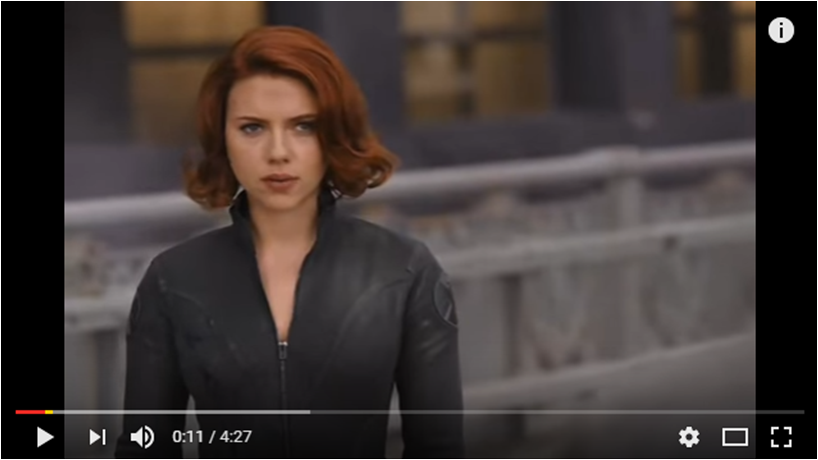

This screenshot provides a great example of a technique that is used excessively in The Avengers. The rule of thirds is used by Seumas McGarvey (Cinematographer of the Avengers) to comply with the theory of thirds. This is used to place the subject of the scene, Natasha Romanoff, slightly to left of shot, which not only is pleasing to the human eye but also creates several connotations. The first of which is this is an exchange between Natasha Romanoff and Bruce Banner, the shot reverse shot method is used to display both sides of the dialogue being presented to the audience, but there are also other characters present when this exchange occurs, so why is the focus on these two characters? The close ups used during the shot reverse shot connotates the idea of sexual tension between the two characters, the pace of the edit quickens and the shot reverse shot dynamics creates the idea to the audience that the only person the characters see is each other. Silence is used to perfection here by Wheldon as he symbolically highlights the feelings of lust and desire the two characters share in this moment. Depth of field is also used in the composition of this shot as it brings focus onto the relevance of the subject being magnified by the depth of field effect. This creates a mystery and the use of blur suggests to the audience that Romanoff has a secret or mysterious past, to compare this to the reverse shot of Banner; there is no depth of action being used to show his character, unlike with Romanoff. The effect this has on the audience is a sense of deviousness and the idea Romanoff is a character that cannot be trusted. McGarvey has used contrast very nicely in this medium close up by using depth of field because despite Romanoff's perceived heroism when she helps conquer evil and save Earth. The use of depth of field is clever by McGarvey as Romanoff is a character of Russian heritage, and as the Avengers is a predominately American film, it creates a deceitful and secretness of the Russian character.
Also used is desaturation, which is a technique, used after production to absorb the colour out of the scene and bring the black and greys out in the shot. This is used to connotates the idea of bleakness and foreshadows events to come. Also, the symbolism of the greys in the dialogue adds to the idea of poisoned love that can never be fulfilled by Banner and Romanoff due to the issues of Banner's anger and the difference in character. This adds to the idea of the character Romanoff is portrayed as by Joss Wheldon. The lack of colour also foreshadows the battle as the darkness is symbolic of the events about to unfold as war is a grey and also mechanic event as the fighters have to forget about the death and fight for what they believe in.


In this shot, the intention of the cinematographer, is to show the power Banner possesses by using an over the shoulder shot, this shows us as an audience that despite Banner turning into the Hulk when he becomes angry is sometimes a decision that he can control. This creates respect due to the fear it causes amongst the other characters, so the use of the over the shoulder shot here is crucial in showing the switch of power from one character to another.
This shot helps to establish the position of each person, and get the feel of looking at one person from the other's point of view. The use of diegetic lighting from the sky is used to provide a contrast from what's occurring in the scene. For example, despite the fact a fight scene is about to begin, the sky is blue and pleasant. This could be to connotates that despite a big alien approaching the heroes; it is going to be okay. If pathetic fallacy was used here and it was raining, the impact this shot would have on the audience would be extremely different as it would create a more doomed and bleak outlook of the battle from the audiences perspective. In terms of camera movement, tracking is used within this snippet of the scene, as this follows a character and immerses the audience to make them feel like, as the audience, you are submerged into the scene, this creates tension and excitement for the audience, as they get a face on exchange which the character, it makes viewing more personal to each individual and provides a unique perspective in which they can draw conclusions regarding events that are unfolding in the scene. To match the contrast being created by the diegetic lighting of the scene, Wheldon also makes the directorial decision of using Contrapuntal Sound of triumphant music being played one the Hulk brings down an alien spaceship which is unusual to the beginning of a battle, this could be Wheldon presenting the unity of the team, and how team spirit with defeat evil, and the contrapuntal sound is used to highlight the good betters evil philosophy. It could also be used to foreshadow the conclusion of the fight; does this show that triumph of the heroes? Maybe, but also it creates an illusion for the audience to make them believe that a typical ending takes place.
This is a birds eye shot, this establishes the landscape and provides an overhead view of the destruction that is being created by the invaders on the ground of Manhattan where the film is mainly set. The diegetic lighting being used conveys a sense of realism, the scene below is naturally created by sunlight and this gives an authentic and real feel to the film. This is important to the audience as they relate to the film as its in a setting they can familiarise with, it also make the audience sway towards the characters who are saving the numerous people who live on this planet, that's personal to the audience as they are included in that bracket in this virtual reality. Computer Generated Images are used to create an illusion that the streets below on this establishing birds eye shot are real. In terms of Wheldon's perspective, CGI is a cost cutting and safety measure taken to protect the actors. In terms of genre, the conventions of an action thriller are the high budget explosions and weaponry, it matches the key conventions of this genre and that has been matched with the use of CGI. This helps portray a sense of realism within the scene and adds makes this easily distinguishes the idea of a thriller. The impact of CGI to the audience is that it enhances the overall experience of the viewer, as it creates a virtual reality which is addictive to the consumer.


This shot is a particularly interesting and relevant one as it invites the viewer to see the invaders for the first time following Hulk's destruction of their spaceship; this is met with groans of battle from the monsters looking to claim Earth as their own. In terms of camerawork, a canted angle is used when the invaders are on the side of a building, and to avoid the disorientation of the audience. A canted angle also makes the background morebalanced; Wheldon has used a canted angle to good effect as it surveys more the scene. Before this shot of the specific invader there is a pan of the invaders reacting to the spaceship being destroyed by Hulk, this is an interesting perspective to take, as most villainous characters are portrayed as cold and heartless, they are relentless killing machines but in this action thriller, the invaders are portrayed with emotion and this, for a slight second, makes the audience think about sympathising for the monsters, but they are quickly changed back to the action with a quick paced edit of Hulk smashing invaders, the quick pace of the edit is held after the outcry of emotion from invaders and the battle is halted, the fact this edit has been held is symbolic to the switch from invaders with emotion to the conventional killing machines and the audiences perspective is immediately changed.
In conclusion, the sequence engages the audience in many ways, the mise en scene are always high budget in terms of lighting, sound and edit. The narrative has to be engaging and the edit must be dynamic and versatile to match the action, and in this film, all of those are present, which makes the audience leaving feeling fulfilled and having witnessed the Avengers, they are left with plenty of food for thought.
Film Analysis by connor southwell on Scribd
Subscribe to:
Posts (Atom)